
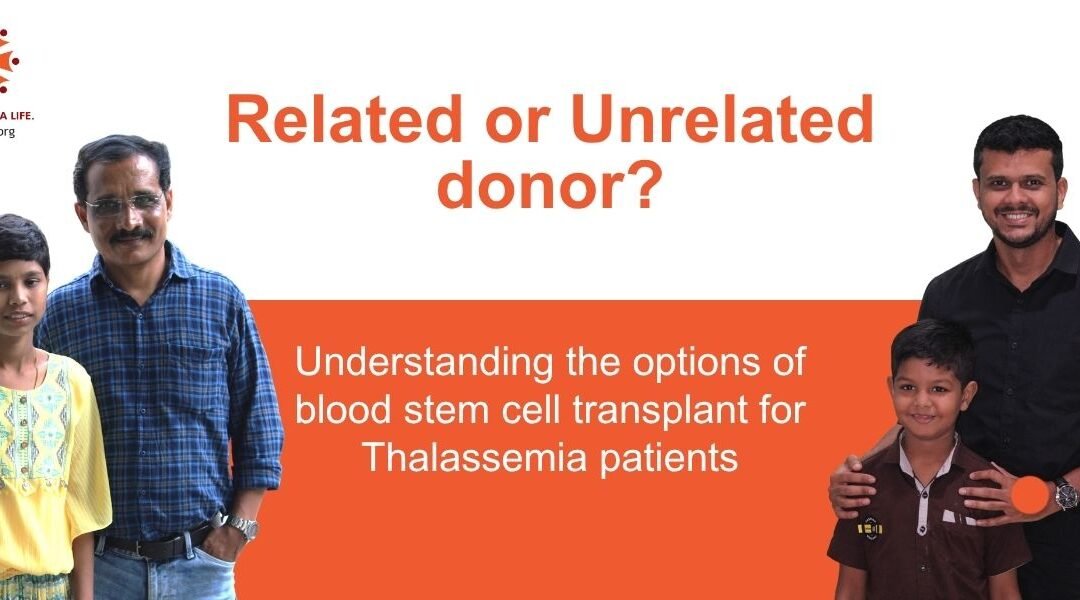
As World Thalassemia Day approaches, conversations around Thalassemia Day 2026 are increasingly focused on treatment pathways, donor availability, and long-term outcomes for patients.
The Donor Gap: When Family Isn’t Enough
For individuals diagnosed with thalassemia major, a thalassemia blood stem cell transplant remains the only curative option. While families often begin their search within, nearly 70% of patients are unable to find a fully matched sibling donor.
This gap makes unrelated donors not just an alternative, but a critical lifeline. An unrelated donor match can significantly improve access to a thalassemia blood stem cell transplant, particularly in a genetically diverse country like India.
Unrelated Donors: A Critical Lifeline in a Diverse Nation
On World Thalassemia Day, it becomes essential to highlight the importance of building a large and diverse donor pool to increase the chances of finding matches.
Organizations like DATRI Blood Stem Cell Donors Registry play a vital role in bridging this gap by connecting patients with unrelated donors. These efforts are especially important as we move towards Thalassemia Day 2026, where the focus must evolve from awareness-driven conversations to actionable solutions.
Unrelated Donors: Understanding the Science Behind the Match
Understanding the distinction between related and unrelated donors is key. While a matched sibling donor is ideal, advances in transplant science have made unrelated donor transplants highly successful, offering new hope to patients who otherwise have limited options.
You Don’t Have to Be Related to Save a Life
Each new donor added to the registry increases the probability of a match—not just for one patient, but for many. This is why World Thalassemia Day is not only about awareness, but also about participation & action.
As we approach Thalassemia Day 2026, the message is clear: You don’t need to be related to someone to save a life. Even strangers can do.
Register Today. Transform Lives Tomorrow.
Registering as a donor today can help enable more thalassemia blood stem cell transplant success stories tomorrow.